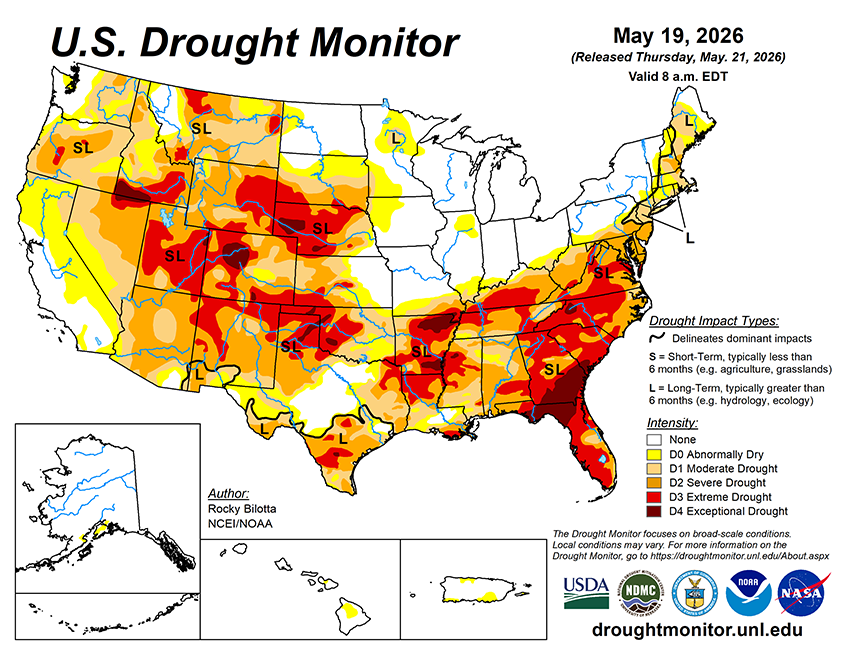
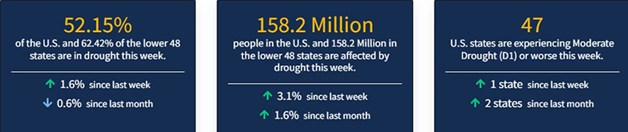
Over the next five days (May 19–23, 2026), the United States can expect a highly dynamic weather pattern characterized by contrasting temperature extremes and widespread storm activity. An early-season heatwave will make headlines across much of the eastern U.S. through midweek, with interior portions of the Mid-Atlantic and the Carolinas seeing highs climb into the lower to middle 90s—warm enough to potentially establish new daily records before a cold front brings cooler relief by Thursday. In stark contrast, the Intermountain West and Rockies will experience below-normal temperatures to start the week, alongside late-season accumulating snow in the higher elevations of Colorado and Wyoming. Meanwhile, a strong cold front tracking across the Plains and Midwest will spark widespread showers and severe thunderstorms. Multiple rounds of heavy rainfall will bring a risk of scattered flash flooding, focusing heavily on Texas, Oklahoma, and Arkansas on Tuesday before an expanded risk of heavy precipitation stretches from western Texas to the central Appalachians on Wednesday.
Further out, 6–10 day outlook (valid May 24–28, 2026) favors above-normal temperatures across most of the United States—stretching from the Rocky Mountains all the way to the East Coast, with the highest confidence for this unseasonable warmth concentrated in the Upper Midwest. Hawaii is also leaning toward warmer conditions. In contrast, temperatures are expected to be colder than average across the state of Alaska, and in a pocket of northwestern Washington state. Meanwhile, near-normal temperatures are forecast in parts of the South and along the West Coast. Probabilities for wetter-than-average conditions favor the vast majority of the country, including Hawaii and portions of Alaska. In the contiguous U.S., this wet weather pattern extends from the Southwest to the East Coast, with the greatest probability of above-normal precipitation expected to be in the south-central U.S., specifically across southern Texas. The West Coast, portions of the Pacific Northwest, the northern Rockies, northern parts of the Midwest, and northern Alaska are favored to receive near-normal precipitation during this time. No areas are favored to be drier than normal.