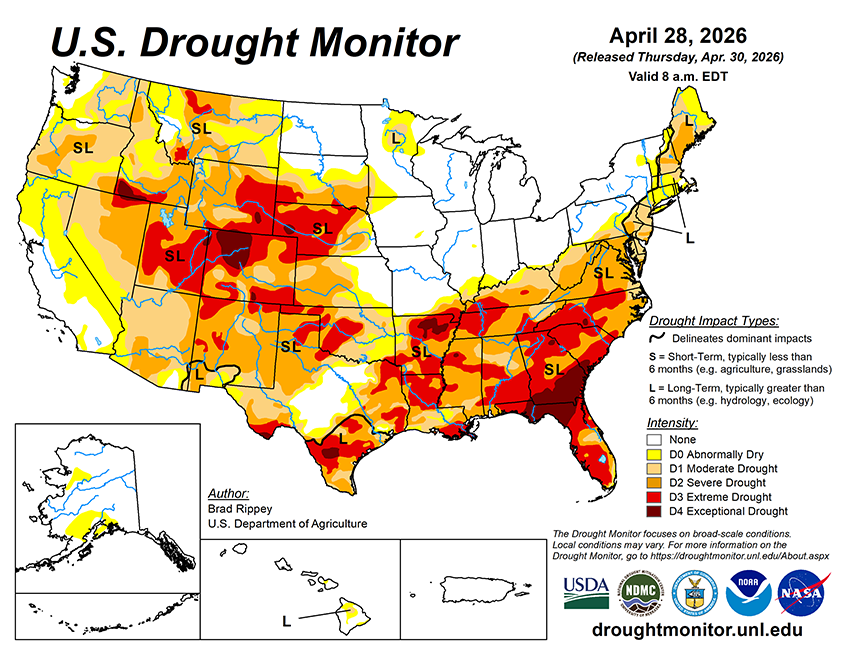
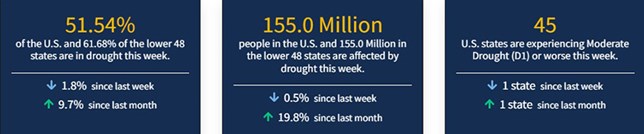
During the next several days, active weather across the South should lead to 1- to 4-inch rainfall totals from much of Texas to the southern Atlantic States. However, some Southern thunderstorms may produce large hail, damaging winds, and isolated tornadoes. The moisture will have a sharp northern edge, with little or no precipitation expected during the next 5 days across the northern and central Plains and Midwest. Generally dry weather will also cover the West, aside from late-season snow in the central and southern Rockies. Elsewhere, a cool pattern across the nation’s mid-section will strengthen, with frost and freezes possible into the weekend across the northwestern half of the Plains into the upper Midwest. By Saturday morning, scattered frost could extend as far south as the Ohio Valley and the southern High Plains.
The NWS 6- to 10-day outlook for May 5 – 9 calls for the likelihood of cooler-than-normal conditions in most areas east of the Rockies, while warmer-than-normal weather will be confined to an area stretching from the Pacific Coast to the northern Rockies, including the Great Basin and northern Intermountain West. Meanwhile, near- or below-normal precipitation from the Pacific Northwest into the upper Midwest should contrast with the likelihood of wetter-than-normal conditions across the remainder of the Lower 48 States.