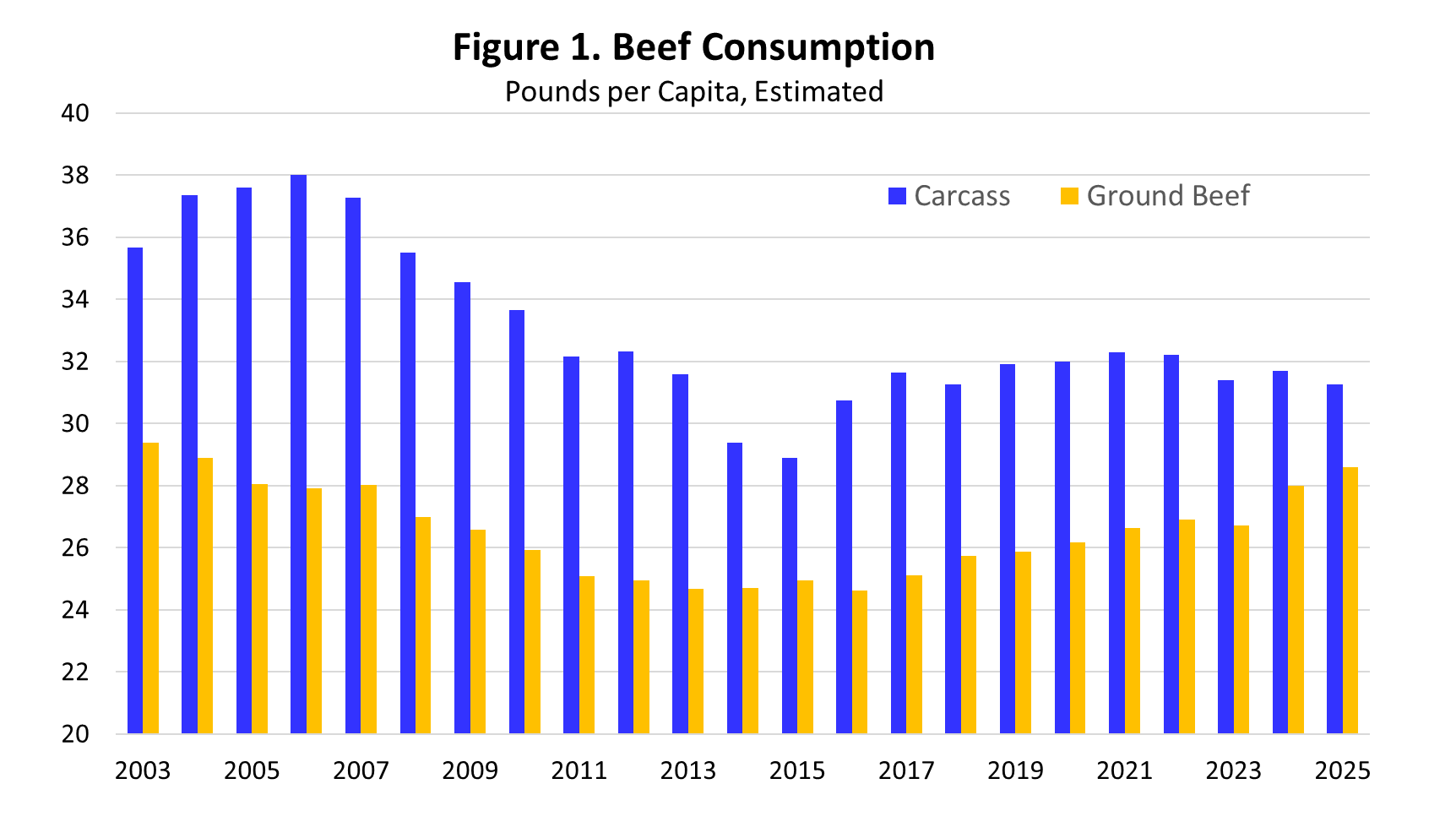
A breakdown of beef consumption shows that per capita supplies of ground beef increased in 2025 to the highest level since 2004.
Derrell S. Peel, Oklahoma State University
As total beef production falls and beef prices increase to record levels, demand for ground beef increases. In 2025, a 3.6 decrease in beef production was offset by increased net beef imports to hold total per capita beef consumption steady with the previous year. Per capita beef consumption for 2025 was estimated at 59.8 pounds per person. Total beef production thus far in 2026 is down 6.2 percent and is expected to be down 3 - 4 percent annually for the year with per capita beef consumption declining despite additional beef imports this year.
A breakdown of beef consumption shows that per capita supplies of ground beef increased in 2025 to the highest level since 2004. Ground beef supplies were estimated at 28.6 pounds per person, up 0.61 pounds per person. Remaining beef consumption (carcass) was estimated at 31.2 pounds, down 0.44 pounds per person (Figure 1 above).
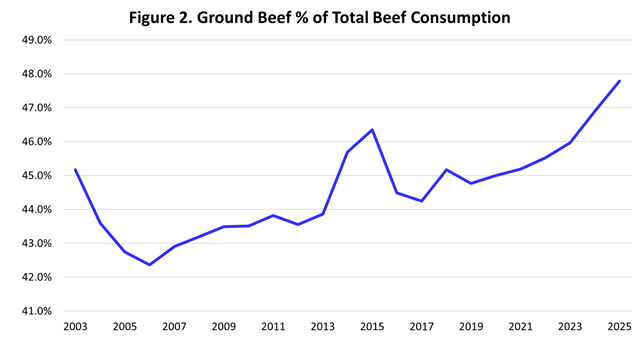
Figure 2 shows that ground beef currently makes up the highest percentage of total beef consumption back to 2003 and is probably at a record level in the U.S. Ground beef consumption has increased simultaneously with record ground beef prices. This happens because ground beef is still the beef product that consumers turn to when beef prices generally rise. Since 2022, the average wholesale price across 39 beef products has been an increase of over 44 percent. However, wholesale ground beef prices have increased over 57 percent over the same period.
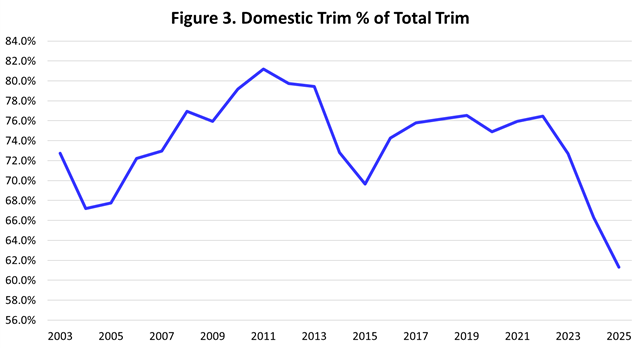
The challenges of meeting ground beef demand are substantial. Ground beef utilizes fatty trimmings from fed cattle and lean trimmings from cull cows and other sources. Total cow slaughter decreased 28.7 percent from 2022 through 2025, leading to a 24.8 percent decrease in nonfed beef production. This is the primary source of lean processing beef used in ground beef mixtures. There are a multitude of ways to prepare ground beef mixtures but a ratio of seven pounds of 90 percent lean to one pound of 50 percent lean is representative of a common 85 percent lean ground beef mixture. This means that seven pounds of cull cow-type beef is required for each pound of trimmings from fed steers and heifers. Fed carcasses produce 150-250 pounds of trim, which means that the lean trim from three to four cull cows is needed to utilize all of the fatty trimmings from each fed carcass. Not enough cow beef is available and lean supplies are routinely supplemented by imported lean. Over the past 20 years, an average of 25 percent of total trim used for ground beef has been from imported beef. In 2025, imported trim accounted for an estimated 38.7 percent of total ground beef trim, leading to the domestic lean share of trim at the lowest level in more than 20 years, currently 61.3 percent (Figure 3). Increased imported trim in the current market is important to support the value of fatty trimmings from fed cattle.
Maintaining the ground beef market is critical in the current situation. Consumer demand for ground beef is high and the ability of beef to be competitive with other proteins depends on ground beef - and fast food demand for hamburgers, in particular.
Derrell Peel explains why beef prices are rising and what it means for consumers, ranchers, and the overall cattle market on SunUpTV from April 27, 2026. https://www.youtube.com/watch?v=Buc9eWwR3Ow