Derrell S. Peel, Oklahoma State University
Beef imports increased 18.0 percent year over year in 2025. Total beef imports have increased sharply due to declining U.S. beef production and high prices as the current market developed. Total beef imports are up 61.4 percent since 2022. A variety of beef products are imported from a number of different countries. Much of the imported beef is lean processing beef used to support ground beef production in the U.S. Imported lean beef supplements domestic supplies of fatty trimmings from fed cattle and lean beef from cull cows and bulls. Fed steers and heifers produce 150 or more pounds of fatty trimmings which much be mixed with lean beef to make ground beef. For example, it takes 7 pounds of 90 percent lean beef to mix with a single pound of 50 percent trimmings from fed cattle to formulate an 85 percent lean ground beef mixture. Without imported beef, it would be impossible to maintain ground beef supplies in the U.S. Per capita ground beef supplies in 2025 were estimated at 29.4 pounds, 49 percent of per capita retail beef consumption of 59.8 pounds.
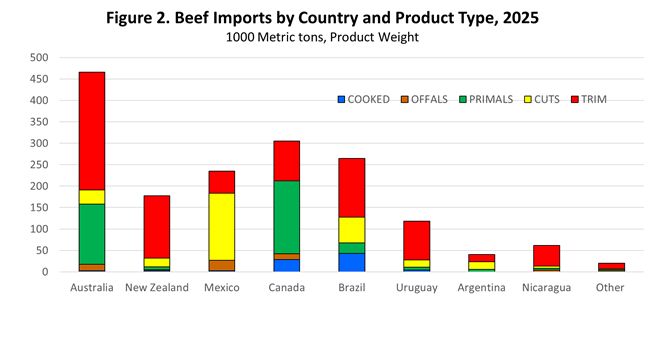
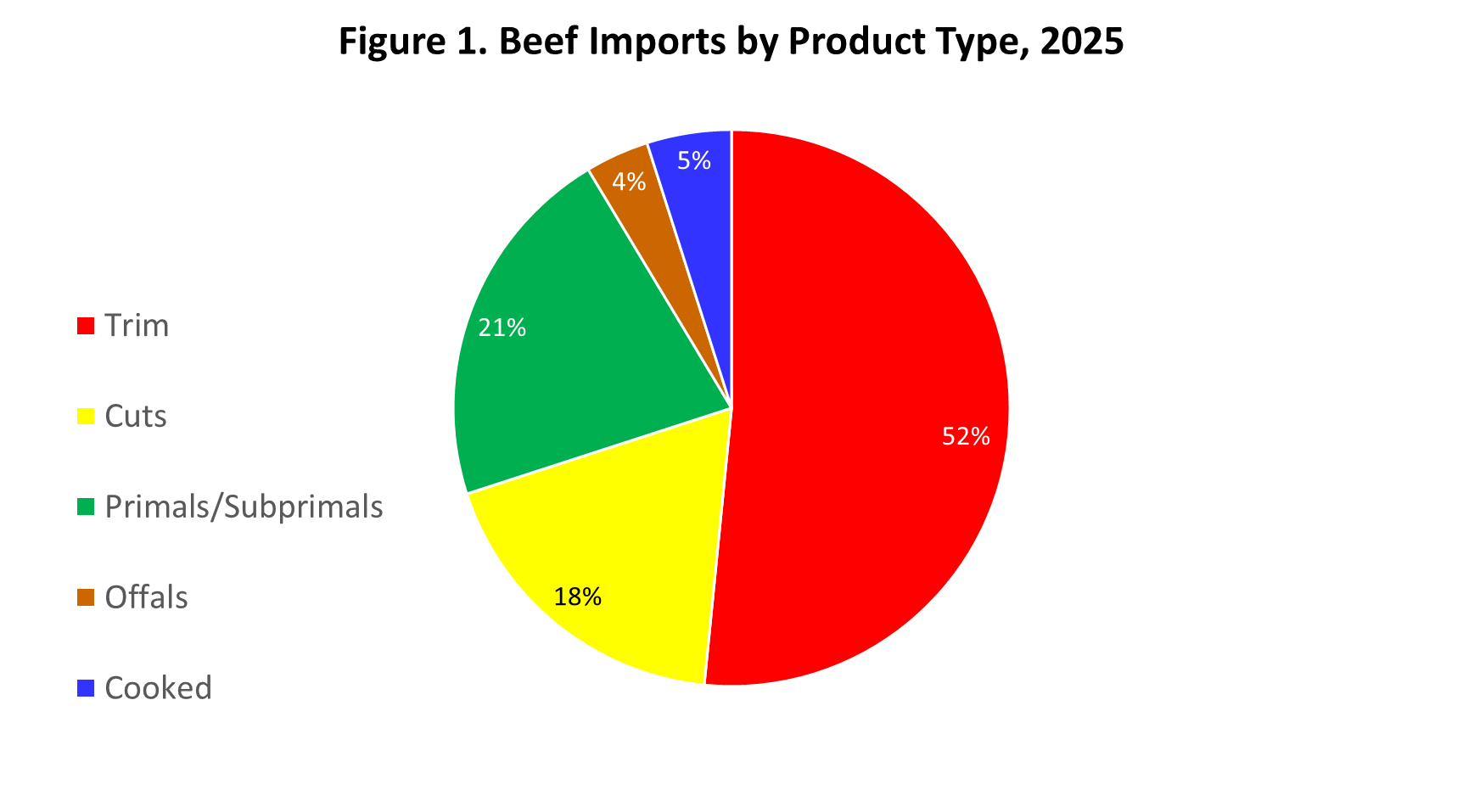
Figure 1 above shows that 52 percent of beef imports consist of beef trimmings. Nearly every source of beef imports includes significant proportions of trimmings (Figure 2). Australia was the largest source of beef imports and the largest source of beef trim, accounting for 31.5 percent of imported trim. New Zealand was the number five source of beef imports but the second largest source of beef trimmings (16.7 percent) because 82.2 percent of beef from New Zealand is trimmings. Brazil is the second largest source of imports and accounted for 15.7 percent of imported trimmings. Canada and Uruguay each contributed just under eleven percent of beef trimmings.
Some portion of the 21 percent of imports in the form of primals/subprimals are also used for ground beef production. In other cases, the primals/subprimals are used as muscle cuts. The majority of primals/subprimals are imported from Canada and Australia.
Imported beef cuts make up 18 percent of beef imports and may be used in either retail grocery or food service. Mexico accounts for over 50 percent of imported beef cuts, much of which is sold in retail grocery markets. Imported cuts from Brazil, Australia, or other countries are more likely used in food service. Minor amounts of edible offals (mostly Mexico) and cooked beef products (mostly Brazil and Canada) are imported as well.
Expanding drought conditions are beginning to impact cattle markets, and understanding these changes is critical for producers and industry professionals. In this update, OSU Extension livestock marketing specialist Derrell Peel explains how worsening drought could influence cattle prices, supply, and market trend on SunUpTV from March 28, 2026.