Derrell S. Peel, Oklahoma State University
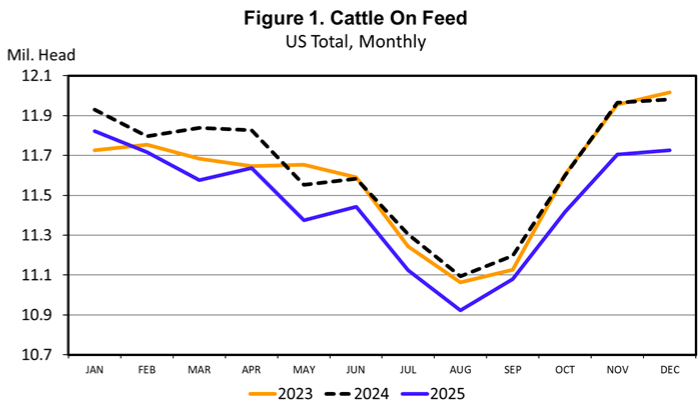
The December Cattle on Feed report showed a feedlot inventory of 11.727 million head, down 2.1 percent year over year and the smallest December feedlot inventory since 2017 (Figure 1 above). Feedlot inventories have declined year over year for 13 consecutive months, leading to a 12-month moving average total the lowest since October 2018. Average feedlot inventories have declined 3.6 percent from the peak in September 2022.
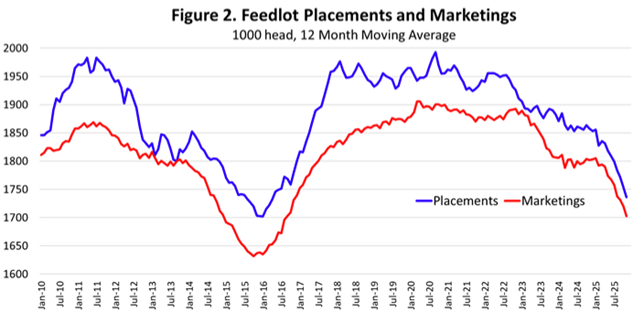
The rather slow decline in feedlot inventories masks a sharper drop in feedlot placements and marketings. Feedlot placements in November were down 11.2 percent year over year and have decreased 8.6 percent in the last six months. Marketings in November were down 11.8 percent from one year ago and have decreased 7.9 percent in the last six months compared to last year. Figure 2 below shows the 12-month moving average annual trends for both placements and marketings. As of November, average of feedlot placements the past year are at the lowest level since April 2016 and average marketings are the lowest since August 2016. Average feedlot placements and marketings have decreased more dramatically in 2025 as tightening feeder supplies were exacerbated by the lack of Mexican cattle imports.
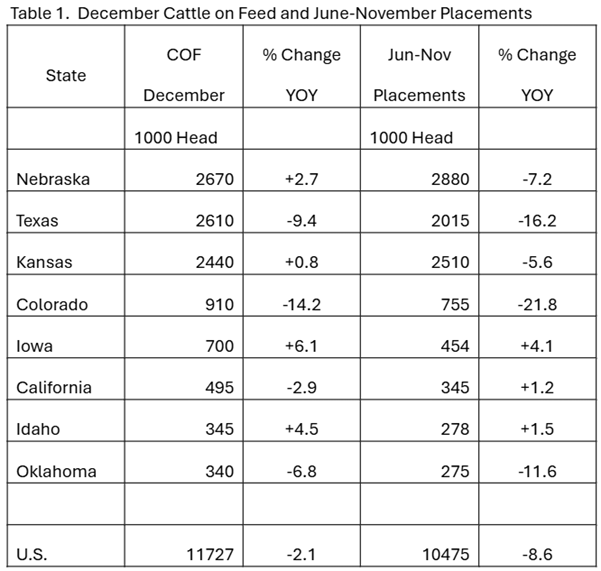
The regional changes are significant. Feedlot inventories in Texas have been smaller than Nebraska the past two months, which has only happened a few times since 1971. Table 1 below shows the current on-feed inventories and feedlot placement totals the past six months for the top eight cattle feeding states. Placements have decreased 16.2 percent year over year in Texas compared to 7.2 percent in Nebraska. December feedlot inventories are down 9.4 percent in Texas but actually up 2.7 percent year over year in Nebraska. Colorado, the number four cattle feeding state, has also dropped sharply with the six-month total of placements down 21.8 percent and the on-feed total for December down 14.2 percent compared to last year.