An Equine Herpesvirus (EHV) outbreak linked to a rodeo event in Texas has spread to at least eight states: Texas, Oklahoma, Louisiana, South Dakota, Colorado, New Mexico, Arizona, and Washington. Many cases have developed into the neurological form, Equine Herpesvirus Myeloencephalopathy (EHM), with symptoms like fever, weakness, and difficulty standing. The virus is highly contagious and spreads through direct contact, contaminated equipment, and airborne particles, but the majority of affected horses can recover with treatment.
Spread and confirmed cases:
The current EHV-1 outbreak originated from the WPRA World Finals and Elite Barrel Race in Waco, Texas, in early November.
As of late November 2025, 37 cases associated with the event have been confirmed in at least eight states.
Cases have been confirmed in Texas, Oklahoma, Louisiana, South Dakota, Colorado, New Mexico, Arizona, and Washington.
South Dakota has also reported cases and confirmed cases have been reported in Alberta, Canada.
Symptoms:
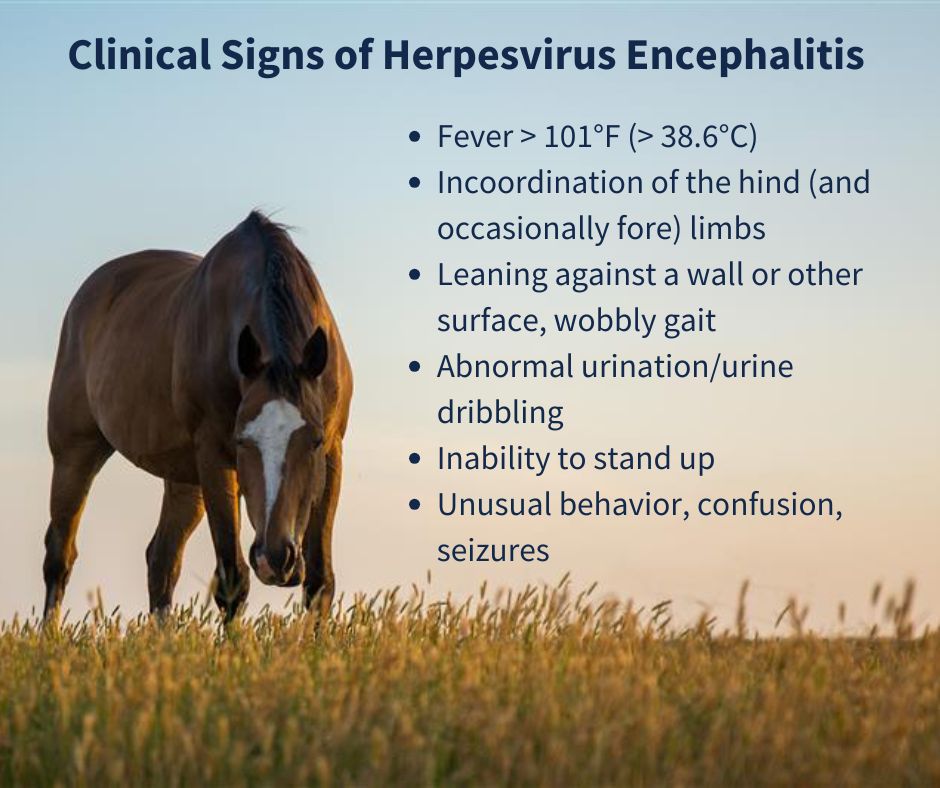
Neurological form (EHM): hind-limb weakness, poor coordination, hind limb paralysis, urine dribbling, loss of tail tone, and loss of the ability to stand.
Respiratory form: Fever, nasal discharge and swelling or stocking up of the limbs.
Treatment and management:
Treatment: Supportive care is the primary treatment and can include intravenous fluids and anti-inflammatory medicines to reduce fever.
Hospitalization: More severe neurologic cases may require hospitalization for intensive veterinary care.
Isolation: Veterinarians recommend isolating affected or exposed horses to prevent further spread.
Monitoring: Horse owners should monitor their horses for any signs of the virus and contact their veterinarian immediately if they suspect an infection.
Movement restrictions: Some states have implemented movement restrictions for horses that may have been exposed to the virus.
For the most up-to-date information on case counts and alerts, refer to the Equine Disease Communication Center website.