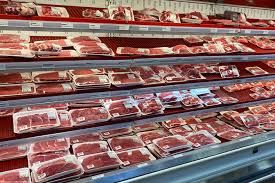
Beef Prices to Keep Rising
The University of Arkansas System Division of Agriculture’s John Lovett reported that “beef prices are projected to continue increasing as U.S. beef production declines with no signs of a cattle herd rebuild. At the start of the year, U.S. cattle inventories were at their lowest since the 1950s, and the U.S. cattle industry has been in liquidation mode since inventories peaked at 94.7 million head in 2019. The nation’s beef herd has decreased by 8 million head of cattle since that time.”
“‘Liquidating inventories is one phase of the cattle cycle, a 10- to 12-year pattern of expanding and contracting cattle numbers driven by changes in producer profitability and worsened by drought,’ said James Mitchell, an extension agricultural economist who focuses on livestock for the University of Arkansas System Division of Agriculture and the Dale Bumpers College of Agricultural, Food and Life Sciences,” according to Lovett’s reporting. ‘The impacts of historically tight cattle numbers are being felt at every stage of the beef supply chain.'”
“Using U.S. Bureau of Labor Statistics, the Fryar Center notes that retail beef prices averaged $8.56 per pound through August 2025 — up 60 cents per pound from the same period last year,” Lovett reported. “Beef has been running about four times more expensive per pound than chicken over the past two years, and as domestic protein demand remains relatively strong, poultry stands to gain more ground against beef and pork, the report stated.”
“‘Understandably, these higher prices have renewed concerns about consumer demand,’ Mitchell said,” according to Lovett’s reporting. “‘There is some evidence that beef has lost price competitiveness in 2025.'”
Brazil Cattle Supply Set to Begin Shrinking
Bloomberg’s Dayanne Sousa reported that “cheap beef may soon become further out of reach. Brazil, one of the world’s few remaining sources of abundant cattle, is heading into a period of shrinking supplies that could push global prices higher.”
“For the past two years, a surge in Brazil’s beef production helped fuel a jump in exports. That’s as ample herds drove cattle prices lower compared to other regions, and ranchers were encouraged to send more animals to slaughter,” Sousa reported. “At the same time, countries such as the US struggled with high food costs, and sought out sources of cheaper beef.”
“That cycle is turning, with impacts that will ripple through global markets and hamper US President Donald Trump’s efforts to bring down beef prices,” Sousa reported. “Climbing prices for calves in Brazil are signaling the start of a new phase, in which ranchers start holding back female cattle to rebuild herds. The practice, known as heifer retention, reduces the number of animals sent to slaughter and marks the beginning of a tightening supply cycle.”
“‘We are coming out of the phase of excess, and the phase of scarcity hasn’t even begun,’ said César de Castro Alves, manager of agronomic consultancy at Itau BBA bank. Scarcity, he added, is likely to last a few years,” Sousa reported. “That’s a major reversal for global beef markets, and bad news for consumers as demand for protein remains high.”
More US Beef Plants Could Close
Bloomberg’s Ilena Peng reported that “American beef plants are under threat as the number of cattle destined for their facilities stays far below historical levels, reflecting the smallest herd in more than half a century.”
“Tyson Foods Inc., the country’s biggest meatpacker, underscored the difficulties for the industry last month as it announced it would close a Nebraska beef plant and reduce operations to one shift at a facility in Texas roughly 450 miles from the Mexican border,” Peng reported. “At least one other big plant and several more regional ones could close in the next 18 months as a result of the ongoing supply pressures, said Hyrum Egbert, an expert who has worked in the beef industry for nearly two decades. The pressures are likely to be more pronounced in the South, where plants typically source some live cattle from Mexico, but ‘I don’t think that anybody is exempt from it right now,’ he said.”